
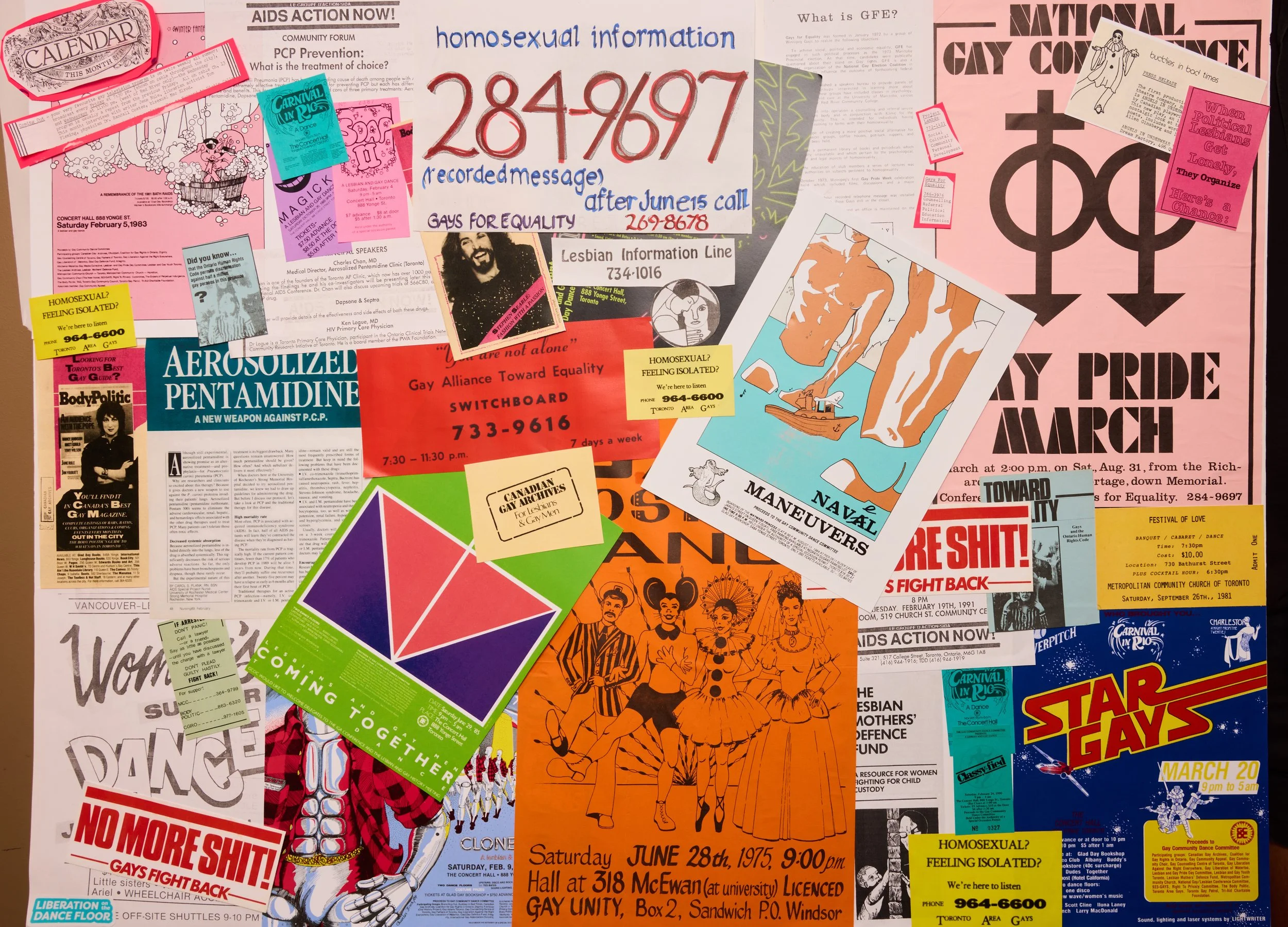

The Gay Alliance for Equality (GAE), or Gayline, was a phone line based out of Halifax, Nova Scotia, was active from 1972 to 1996. Volunteers provided callers with information, counselling, and referrals with the goal of creating visibility for and supporting the local queer community.
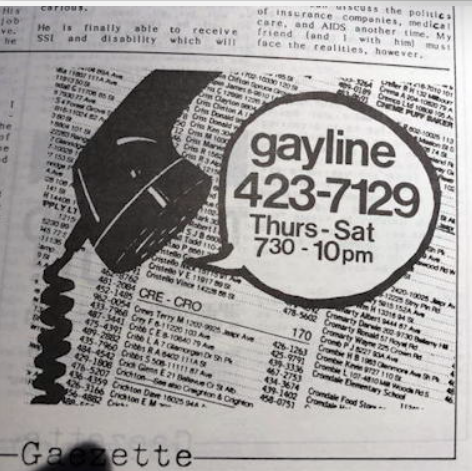
Newspaper Ad for Gayline, 1988.
The Gay Alliance for Equality’s (GAE) phone line, known as Gayline, was started in 1972 by Tom Burns (the GAE’s first chairperson) and David Gray and Nils Clausson [1] in Halifax. Funded by the GAE as well as by donations from local gay bars, Gayline remained active for twenty-four years before shutting down in 1996. The phone line was conversational in nature, and was operated by volunteers who spoke directly to callers, providing peer counselling, general information about resources and events, and referrals to various gay-friendly professionals and services.
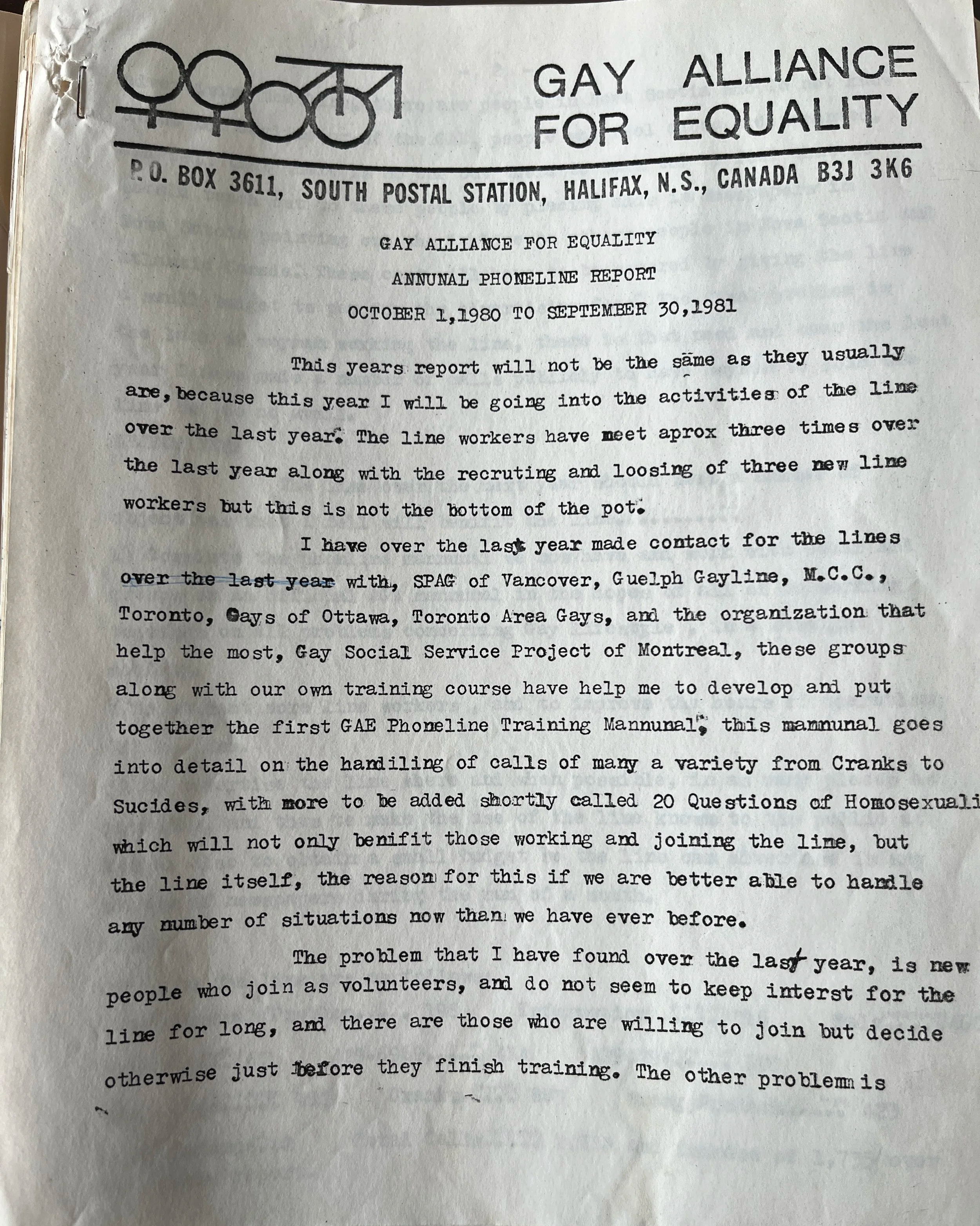
GAE Annual Phoneline Report, 1981
Gayline and the GAE frequently changed their location, operating out of numerous different buildings in Nova Scotia, including The Turret, The Greenlantern Building, and the basement of Rumours. Callers discovered the phone line through different advertising methods, such as newspaper ads and posters in public spaces, and the adverts on university campuses particularly successful in connecting to the local community [2]. Gayline received calls from both men and women, though the number of women callers fluctuated depending on the number of women volunteers working at Gayline. In the 1990s, the phone line was renamed The Gay, Lesbian & Bisexual Line, [3] and the GAE was renamed The Gay and Lesbian Association (GALA) [4]. In 1992, after operating for twenty years, Gayline became the oldest gay phone line in Atlantic Canada [5].
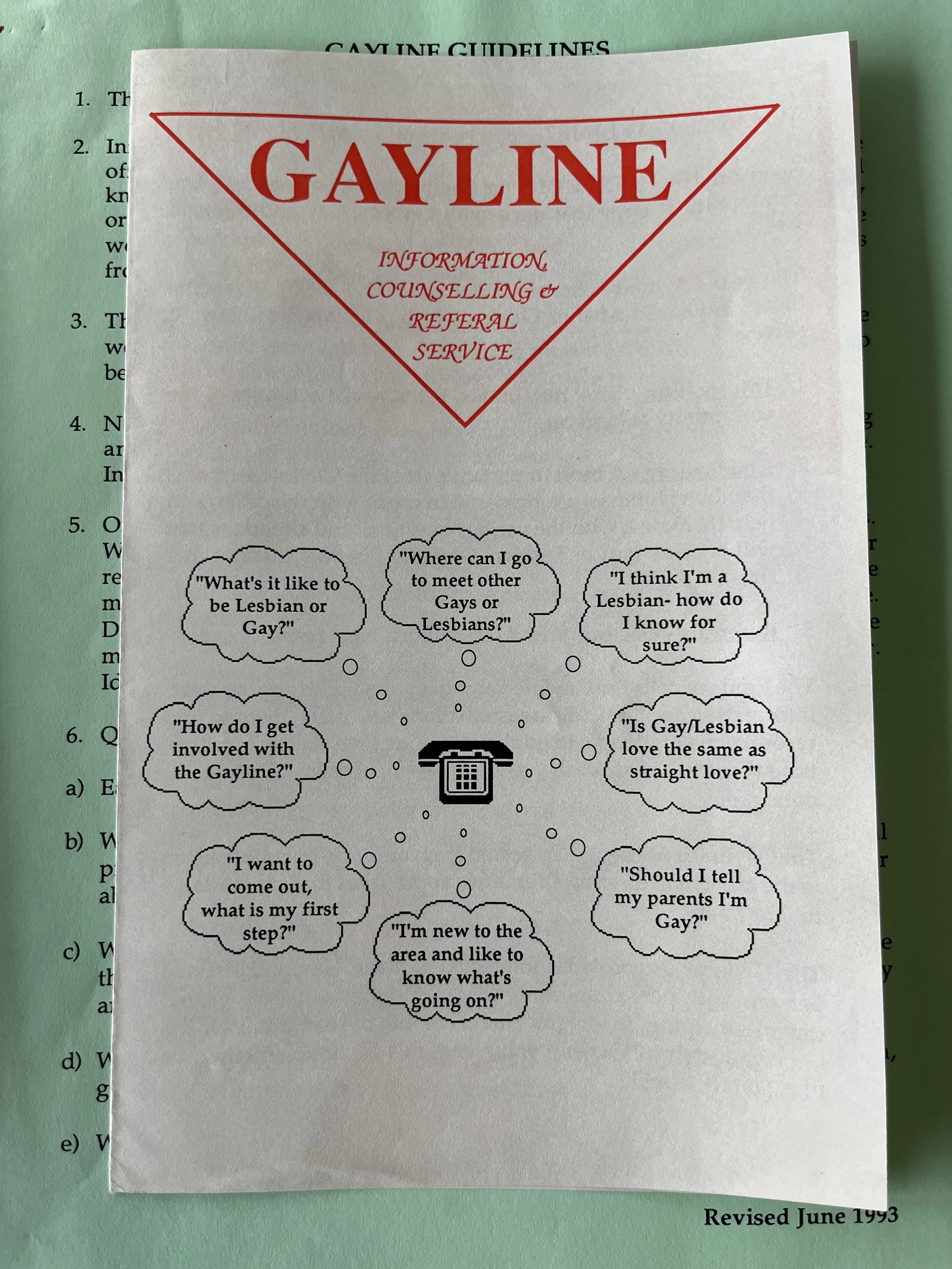
Gayline Poster. Courtesy of Dalhousie Archives.
The GAE’s phone line was founded in response to the needs of the time, specifically the desire to address discrimination against queer people and increase positive visibility for the community by educating the public. Tom Burns conceived of Gayline as a way to help queer people come out and accept their identity by showing them there were other gay people in Halifax they could turn to for support [6]. He also wanted to work towards ending the practice of conversion therapy [7] and lower the suicide rate of queer people by supporting mental health initiatives [8].
Burns states that “in those days most [gay people] were invisible and I think that’s why it started. Invisibility was a good thing and it was a bad thing, but we said gay people are here and we do exist.” When discussing the work done by the line, Burns said, “I hope that we saved some people's lives” and that it “was an important thing” for people to know “they were not alone [9].”
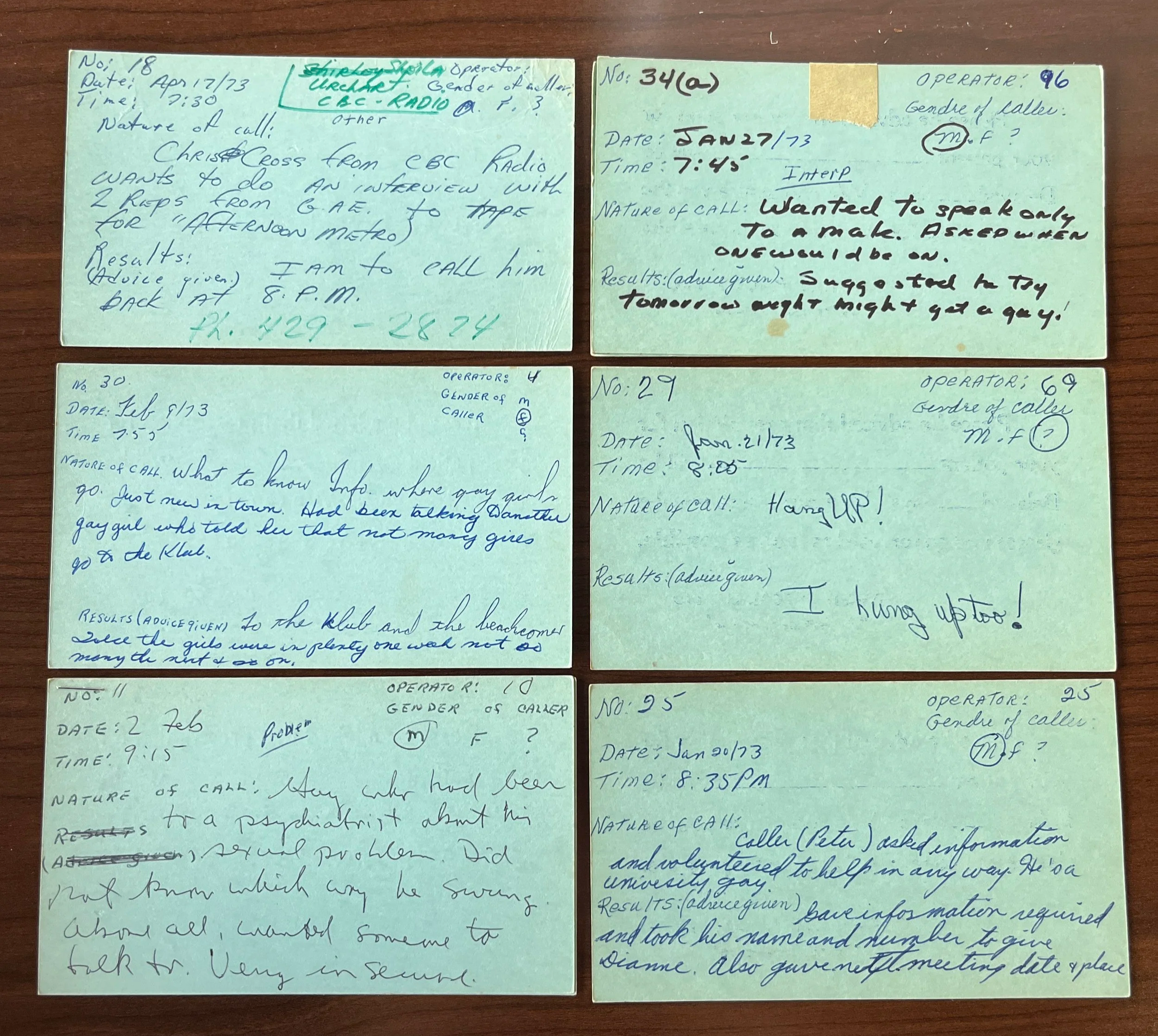
Gayline Call Cards, 1973.
The GAE was particularly focused on liberating lesbians and gay men, “particularly in the areas of legal and social discrimination,” and the organization worked “to change prevailing attitudes towards lesbians and gay men in the ‘straight’ community” by combating the negative impacts of sexual stereotyping [10]. Gayline supported these initiatives by “promot[ing] education regarding homosexuality… educat[ing] the public about issues confronting homosexuals, and assist[ing] individual homosexuals [11].”
Gayline was popular in Halifax and consistently received calls. On a busy night, volunteers might speak to more than six callers in the few hours the line was open [12]. More than half of the genuine callers were requesting information about nearby gay bars, baths, or cruising areas, and the popularity of cruising-related calls caused Gayline to start providing information about safe sex in the 1980s [13]. Less common were counselling calls, during which volunteers discussed personal issues with callers and provided them with emotional support. Oftentimes, callers tried to figure out if they were gay by discussing their experiences and desires [14].
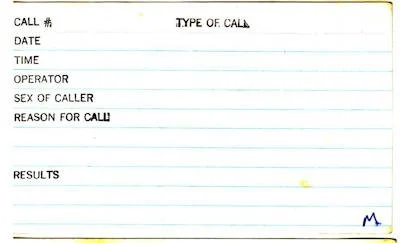
Blank Call Card. Photo courtesy of Dalhousie Archive.
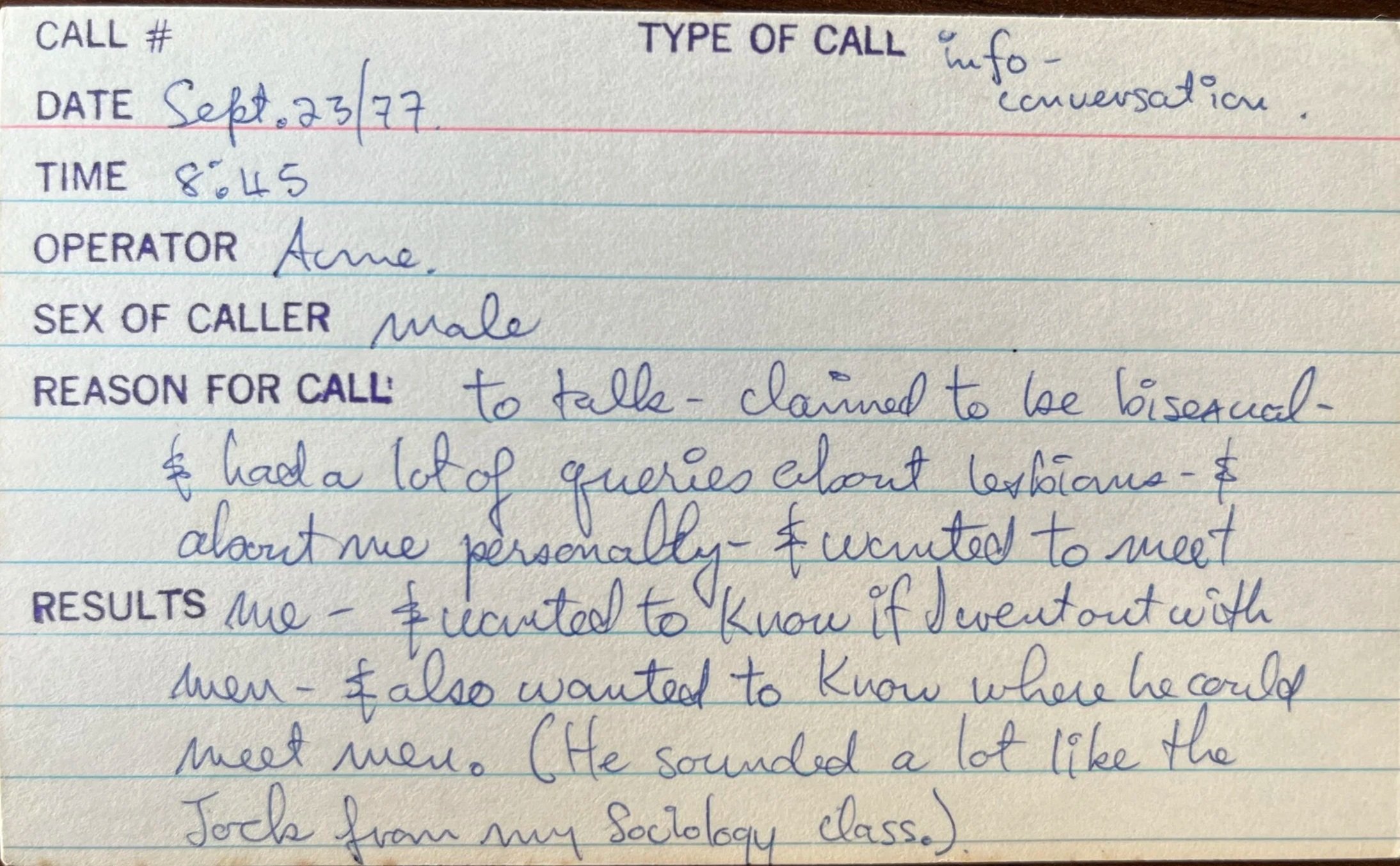
09/23 Gayline Call Card, 1977.
Gayline also received many crank and harassment calls, and although these calls drained morale and diverted volunteers’ time from genuine callers, volunteer Daniel MacKay found the crank calls from homophobes to be a positive opportunity to combat negative stereotypes. MacKay stated: “Of course we know that a lot of these gay ‘bashers’ were curious so turning around that kind of call was really rewarding [15].” They also received many hang-up calls, which were not always pranks, but were often presumed to be gay people too afraid to speak over the phone but still looking for support [16].
Volunteers were essential to the operation of Gayline, as they made up the organization’s entire personnel, including directors and operators alike. Phone line operators were expected to work a minimum of one shift a month [17], where they answered calls, wrote call logs and sometimes daily diaries, and met with people from organizations who wanted to work with Gayline. A document produced in June 1993 lists requirements for volunteers, stating they must be at least nineteen years old, have no issues preventing them from doing this type of work (including legal or psychological), and must have a positive and healthy attitude about being queer [18]. For many volunteers, their reason for getting involved was to help individual queer people and benefit the gay liberation movement. A Gayline volunteer of nine years said they became a volunteer because they enjoyed the sense of connection they felt with callers and liked providing reassurance to people who needed someone to talk to [19].
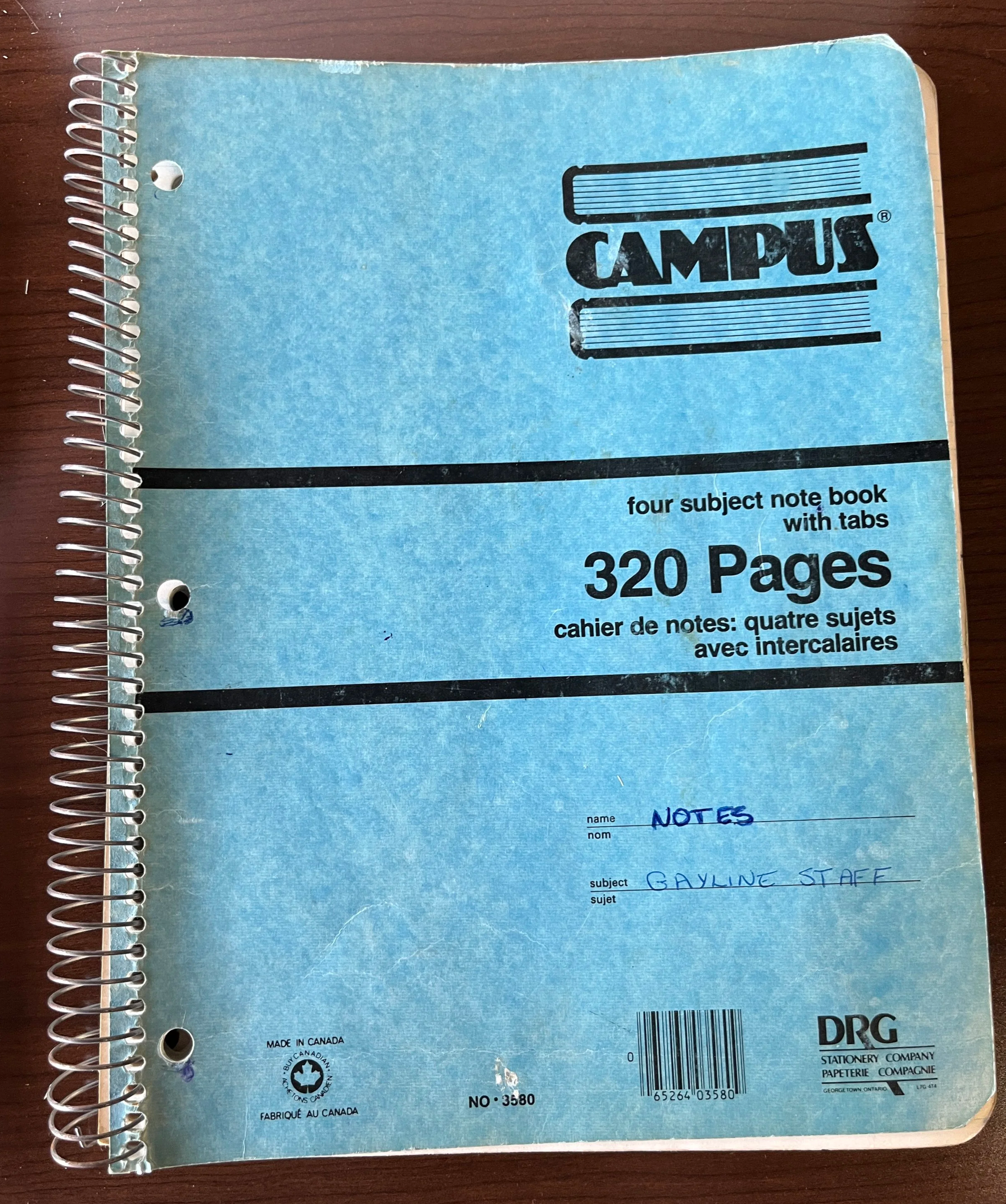
Gayline Staff Notebook.
Gayline started working on their first training manual in late 1980 [20]. New volunteers had to attend an in-person, full-day training session, then complete multiple shifts alongside an existing volunteer [21]. The in-person training session was not simply about learning how to operate the phone line, but was also about learning the values of GAE/GALA and being introduced to the available scholarship related to gay and lesbian studies [22]. Volunteers were provided a mandatory reading list which included books and scholarly, peer-reviewed articles related to homosexuality [23], one of which was called The Gay Mystique which covered theoretical social questions and institutional questions about gay life [24]. The emphasis on the education of volunteers was further seen through the inclusion of professional speakers from different fields—including legal, medical, and psychiatric—at training sessions [25]. Volunteers were also taught about various gay organizations they could refer callers to if needed, and were provided with a list of gay places to patronize, including The Klub, The Heidleburg Lounge, The Picadilly Tavern, and The Women’s Centre [26].
Gayline was also important for its inclusion of women within the phone line. Many phone lines lacked women volunteers, and in order to feel understood, queer women had to call lesbian-run phone lines, of which there were few. Gayline had similar issues until director Anne Fulton made a concerted effort to bring more women volunteers to the phone line. By 1982, half of Gayline’s volunteers were women [27]. Fulton’s success can be considered a feminist act that demonstrated the desire and ability for queer men and women to work together in harmony.
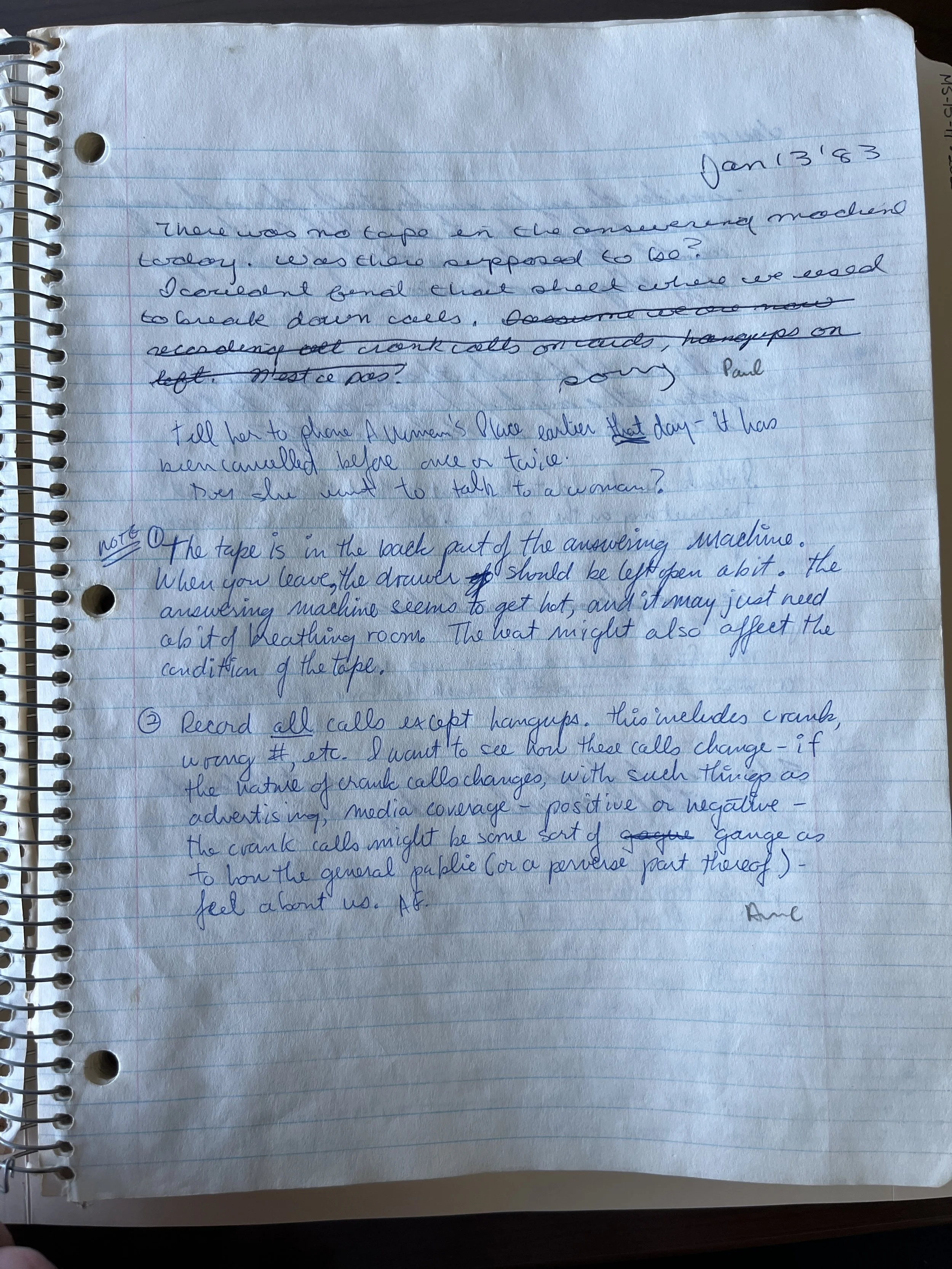
Handwritten Notes Between Volunteers, 1983.
Aside from the individual benefits provided to callers, Gayline positively impacted the lesbian and gay liberation movement by connecting with various other gay phone lines and organizations, creating a national network. Connexions, a conference for lesbian and gay phone lines in Atlantic Canada, took place in the summer of 1983, and Now Can We Talk About AIDS: A First National Conference for Gaylines in Canada was held in 1994 [28]. Such national networking created stronger bonds throughout Canadian queer communities and demonstrated a sense of collective organizing power among queer activists.
Gayline and the GAE itself were heavily dependent on other queer activism of the time, both within and outside of Canada. Tom Burns and David Gray, founders of the GAE, stated they were inspired to start the organization due to the Stonewall Inn Riots of 1969, an impactful moment of queer resistance in New York that sparked further queer activism and the eventual formation of Pride Month [29]. Like the Stonewall Inn Riots, Gayline acted as a spark for political activism, as the first lesbian and gay picket in Halifax was caused by the CBC’s refusal to put out a public announcement about Gayline’s services [30]. Activism was inherent to the foundation of the phone line and its lasting impact; the central goals of supporting queer people while creating visibility and respect for the community are fundamentally political considering the oppression that gays experienced during the 1970s and 80s.
↓ Bibliography ↓
[1] Chisholm, Cassidy. “‘He Braved Up When We Needed Him’: Friends Pay Tribute to Pioneering Gay Activist Tom Burns.” CBC News, August 23, 2022, https://www.cbc.ca/news/canada/nova-scotia/tom-burns-trailblazer-gay-rights-halifax-1.6558655
[2]“Gayline Report,” May 1983, MS-15-11, GayLine Administrative Records, Ron and Bryan Garnett-Doucette fonds, Dalhousie University Archives, Halifax, NS.
[3]“The GayLine.” *Halifax Rainbow Encyclopedia. * [4] “Annual Report of the Gayline Collective,” 1991, MS-15-11, GayLine Administrative Records, Ron and Bryan Garnett-Doucette fonds, Dalhousie University Archives, Halifax, NS.
[5] “The Nova Scotia Gayline Celebrates 20 Years,” n.d., MS-15-11, GayLine Administrative Records, Ron and Bryan Garnett-Doucette fonds, Dalhousie University Archives, Halifax, NS.
[6]“Gay Alliance Founder Remembers When ‘There Were No Gay People in Halifax.’” CBC News, July 6 2022, https://www.cbc.ca/news/canada/nova-scotia/gay-alliance-founder-remembers-when-there-were-n o-gay-people-in-halifax-1.6512575.
[7] Chisholm, “‘He Braved Up.’”
[8] “Gay Alliance Founder,” CBC News.
[10] “Gay Alliance for Equality (G.A.E.).” Connexions Digest (1981). https://www.connexions.org/CxLibrary/CX2192.htm.
[11]“Information Regarding the Gay Alliance for Equality,” n.d., MS-15-11, GayLine Administrative Records, Ron and Bryan Garnett-Doucette fonds, Dalhousie University Archives, Halifax, NS.
[15] Quoted in “The GayLine,” *Halifax Rainbow Encyclopedia. *
[16] Peter Zorzi, Queer Catharsis, 1990, www.onthebookshelves.com/qcmenu.htm.
[17] “Annual Report of the Gayline Collective,” GayLine Administrative Records, Ron and Bryan Garnett-Doucette fonds.
[18]“Gayline Regulations,” June 1993, MS-15-11, GayLine Administrative Records, Ron and Bryan Garnett-Doucette fonds, Dalhousie University Archives, Halifax, NS.
[19] “The Nova Scotia Gayline Celebrates 20 Years,” GayLine Administrative Records, Ron and Bryan Garnett-Doucette fonds.
[20]“GAE Annual Phoneline Report,” Sept. 1981, MS-15-11, GayLine Administrative Records, Ron and Bryan Garnett-Doucette fonds, Dalhousie University Archives, Halifax, NS.
[21] “The GayLine,” Halifax Rainbow Encyclopedia.
[22] “Help Line Training Session Notes,” Oct. 1975, MS-15-11, GayLine Administrative Records, Ron and Bryan Garnett-Doucette fonds, Dalhousie University Archives, Halifax, NS.
[24] Fisher, Peter. “The Gay Mystique.” Gay Scene, vol. 2, no. 12, 1980, n.p.
[25]“Phoneline Report,” Sept. 1982, MS-15-11, GayLine Administrative Records, Ron and Bryan Garnett-Doucette fonds, Dalhousie University Archives, Halifax, NS.
[26] “Help Line Training Session Notes,” GayLine Administrative Records, Ron and Bryan Garnett-Doucette fonds.
[27] “Phoneline Report,” GayLine Administrative Records, Ron and Bryan Garnett-Doucette fonds.
[28] “Now Can We Talk About AIDS: A First National Conference for Gaylines in Canada.” Feb. 1994, MS-15-11, GayLine Administrative Records, Ron and Bryan Garnett-Doucette fonds, Dalhousie University Archives, Halifax, NS.
[29] Chisholm, “‘He Braved Up.’”
[30] Rose, Rebecca. “The Jury Room.” Historic Places Days, July 4 2023, https://historicplacesdays.ca/places/the-jury-room/.