
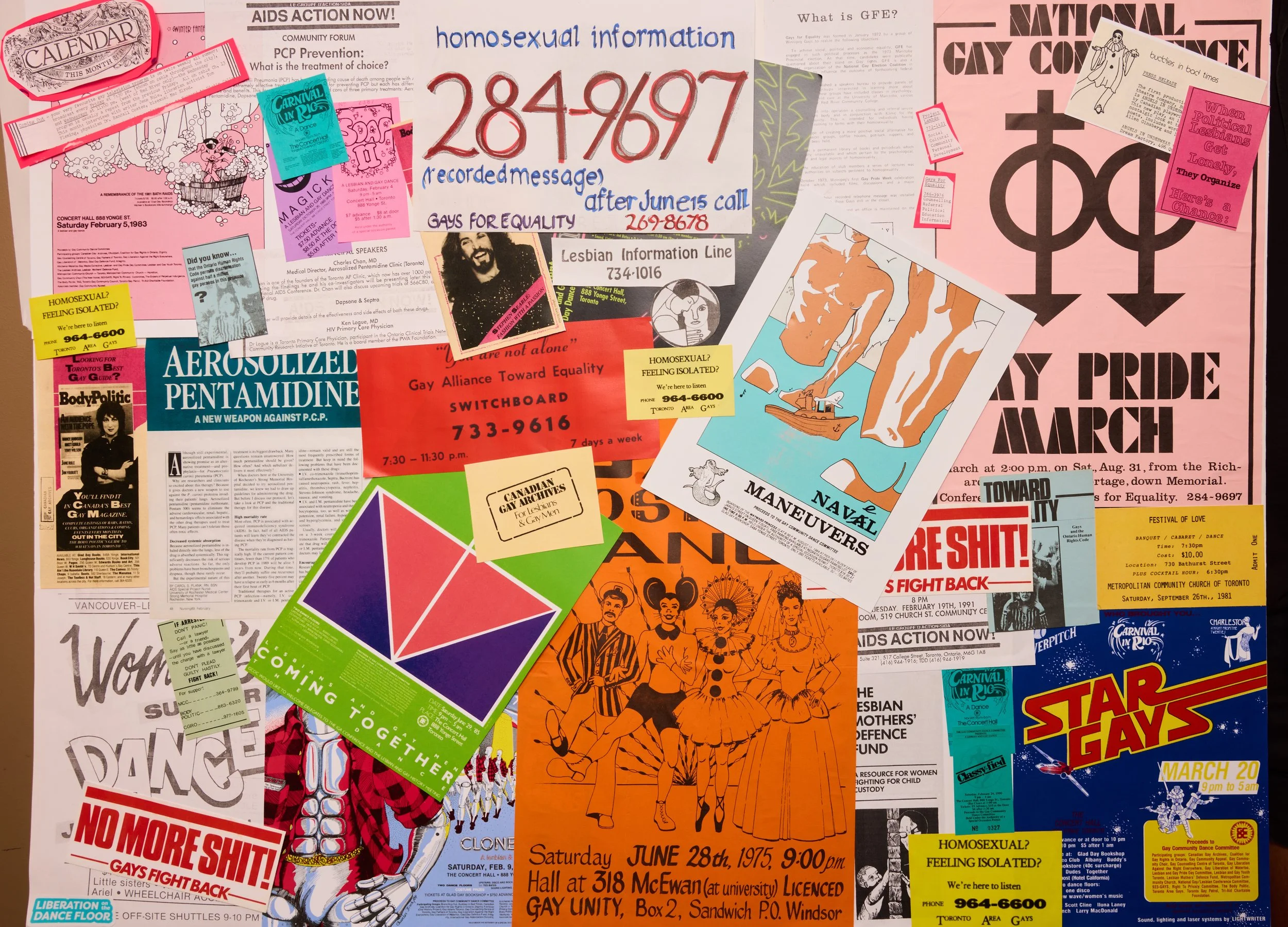

LESBIAN INFORMATION LINE - VANCOUVER, BC - CALL NOW:
(604) 734-1016
LESBIAN INFORMATION LINE - VANCOUVER, BC - CALL NOW: (604) 734-1016
The Lesbian Phone Line began in the winter of 1977, when LOOT (The Lesbian Organization Of Toronto) was established, which became the first lesbian-only hotline in the city. After the 1976 Lesbian Conference in Ottawa, a group of Toronto women met in hopes of organizing the lesbian community within the city. A number of needs were identified, including avenues for more efficient communication, a place to meet, and a base for political action. LOOT began organizing sections and events including a phone line, a weekly drop-in, a newsletter, a library, Sunday brunches, New Year’s dances, open houses, and various political actions, such as marches.
In Becki L. Ross’ The House that Jill Built, Ross describes peer counseling over the phone as a standard service within lesbian and gay organizations. LOOT began the Lesbian Phone Line as an answer to the lack of lesbian-only lines, where prior to their establishment, lesbians had been calling the Community Homophile Association of Toronto (CHAT) and Toronto Area Gays (TAG) phone lines [1].
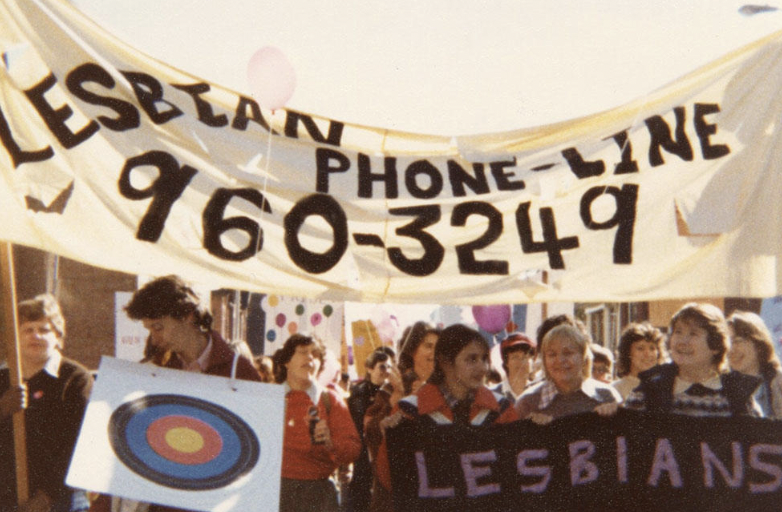
Lesbian Phone Line [March, Ottawa Records]
At (416) 960-3249, patrons could reach a LOOT member during the evenings. Information on events and community bulletins were made easily accessible with a simple phone call, alongside political and emotional support from a fellow lesbian in the city. Generally, the line offered peer counseling and information referrals, staffed by volunteers. In Information Activism: A Queer History of Lesbian Media Technologies, Cait McKinney describes the phone line as “care and capacity building” through the political exchange between the active caller and an active listener, both creating and accessing archives of information [2].
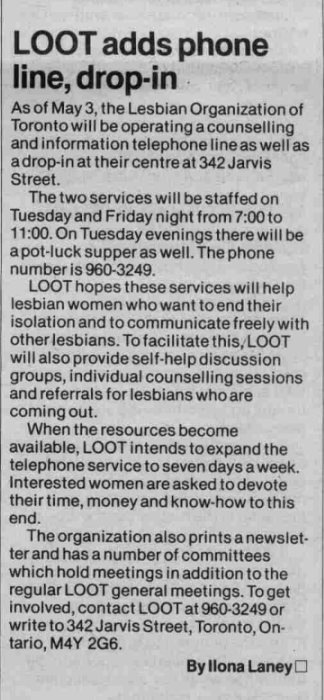
LOOT Phoneline Article.
LOOT often held workshops and community meetings to discuss the future of the organization and best practices in its leadership. They also deliberated on what the lesbian community of Toronto within the 70s and 80s needed most, and how LOOT could most effectively accommodate those needs [3]. In later years, Ross describes the passion felt by its members for the necessity of the lesbian-only phone line: Sharon Stone expressed acute dismay at the prospect of shutting down a service so fundamental to LOOT's existence: 'Our phone-line is slipping ... We cannot let it. It is unthinkable that a womyn may be forced to call Toronto Area Gays (TAG) because no lesbians want to answer her questions. What happened to sisterhood? And separatists, how can you so easily let a womyn turn to males for help? I hope this situation angers you. I don't want you to find our plight touching and hope that someone does something. I want you to be moved enough to volunteer at least an hour a month yourself. Because if you don't do it, who will?' [4]
After the closure of LOOT, the phone line continued to run, and was officially renamed “Lesbian Phone Line.” Past 1981, the goal was to differentiate the line from LOOT, however, the phone number did not change. A 1982 issue of The Body Politic describes the renaming as a response to “...the burden of the hopes and expectations, the resentment and nostalgia still felt towards LOOT [5]. Calls were taken through 1984 [6], until the number became out of service. LOOT’s phone line was a significant resource for local lesbians to access information and work towards addressing issues in the city that affected lesbians, specifically. Despite its closure, the cultural impact of LOOT’s phone line had on the city of Toronto persists to this day.
↓ Bibliography ↓
[1] Ross, Becki. “The House that Jill Built.” University of Toronto Press eBooks, 1995, https://doi.org/10.3138/9781487579579.
[2] McKinney, Cait. Information Activism: A Queer History of Lesbian Media Technologies. Duke University Press Books, 2020. Pg. 67.
[3] “Call for Lesbian Dialogue.” Rise Up!, 1979. https://riseupfeministarchive.ca/document/loot-lesbiandialogue342jarvis-toronto.
[5] Pink Triangle Press, ed. “Phone Line Plans Expansion.” The Body Politic, January 1982.
[6] Warner, Tom. Never Going Back: A History of Queer Activism in Canada. University of Toronto Press, 2002.